Engineering notes · Published on LinkedIn
“I thought I was an architect. With AI, I was handing out work like a businessperson.”
“That’s when I realized the result could be right and the structure wrong.”
“I thought I was an architect. With AI, I was handing out work like a businessperson.”
“That’s when I realized the result could be right and the structure wrong.”
Lately I’ve been giving agents real app-development work through OpenClaw. I’ve even had them run retrospectives the way our organization does, to see whether an AI-based development method holds up in practice.
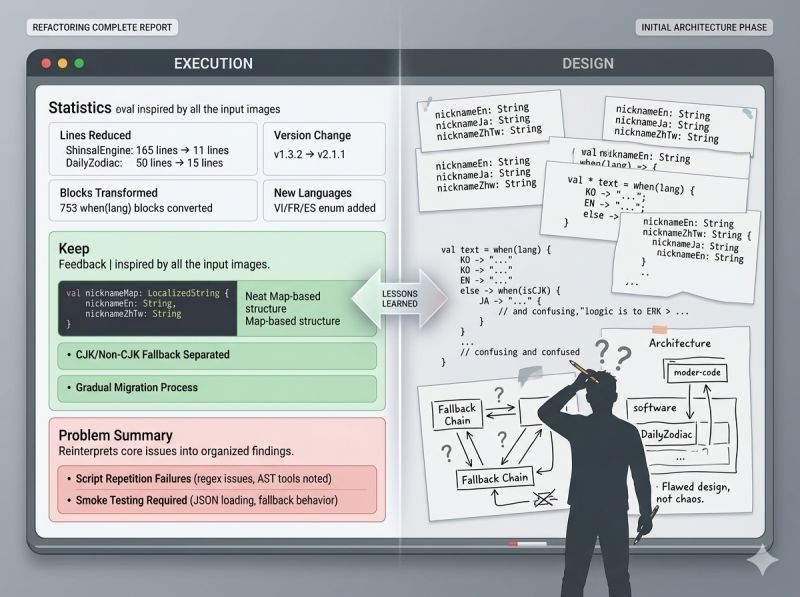
I asked the agents to run a retrospective on our latest i18n refactoring. The results exceeded my expectations: a phased migration strategy, separate fallbacks for CJK and non-CJK languages, a move to a LocalizedString structure, and commit-level management with rollback options. I saw the kind of judgment and improvements I’d expect from a human team.
The problem surfaced afterward. I’d started this project with a global rollout in mind and was pleased that the features worked. As soon as I added requirements, the limits of the code structure became apparent. My requirements had described behavior. I’d left out the structural and architectural intent and accepted the result without an intermediate design review.
Looking back, I’d been assigning work like a businessperson. Being able to build something and being able to turn it into a business are different things. AI lets almost anyone produce a result. Defining the structure and designing for scale and maintenance matter more than ever.
I’m relearning how to give AI work, beyond simply knowing how to use it.
#AI #SoftwareArchitecture #VibeCoding
All essays