Engineering notes · Published on LinkedIn
Preparing for a business trip, I noticed something odd.
It hardly felt like I was making anything. I was leading an architecture session, and even choosing the structure was tricky. Engineering, business and legal would all be in the room. Engineers could follow a few technical terms. Business people needed the customer journey. Legal needed to understand what happened to the data. I had to reach all three.
Preparing for a business trip, I noticed something odd.
It hardly felt like I was making anything. I was leading an architecture session, and even choosing the structure was tricky. Engineering, business and legal would all be in the room. Engineers could follow a few technical terms. Business people needed the customer journey. Legal needed to understand what happened to the data. I had to reach all three.
I gave up trying to pick one perspective and included them all: the technical structure, customer scenarios and who was responsible for which data. Woven into one sequence, they became a story. The deck ran to more than 80 slides.
I’d faced those questions before. What changed was how I made the deck. I spent very little time making slides myself. I kept supplying material instead.
• Why does this system exist?
• Why are these relationships grouped this way?
• What will these people want to know?
• How far do I want the explanation to go?
I kept adding to it. Some of it was wrong. I reversed quite a few decisions. At some point, once I set the direction, the output followed. I hardly thought about how to craft a good prompt. I kept building up the material I needed to explain things.
The same happened on site. I changed slides several times to suit the flow. All I had to decide was where I wanted to take the presentation. The mechanics followed.
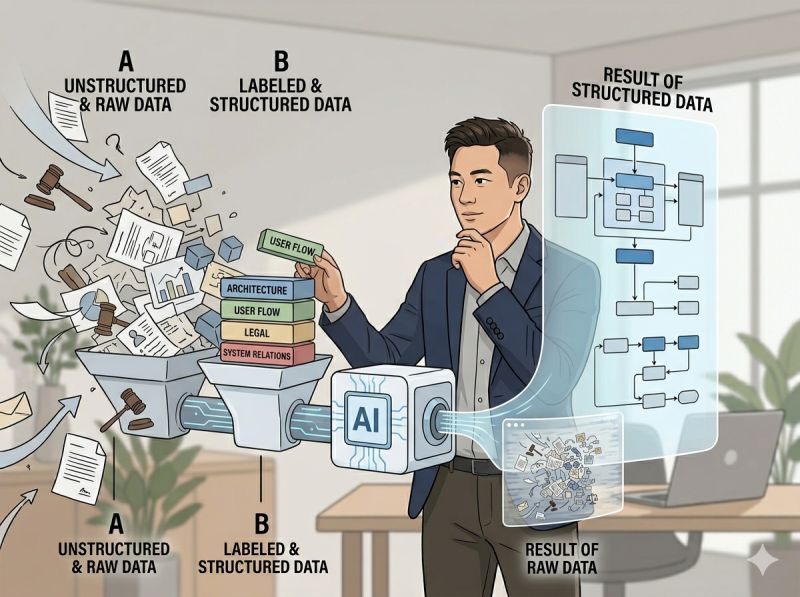
What stood out was how much depends on the quality of the material you hand over. We talk a lot about prompts, context and agents. Judging by this experience, I expect the relative importance of those distinctions to diminish. What matters is what I know, how clearly I can structure it, and whether I can pass on enough of it.
The center of my work felt like it was shifting, from making things myself to handing them over well. Before the trip I’d met friends who never used AI, others who were curious but didn’t know how, and others already using it deeply. The contrast was striking, especially since online it looks as though everyone is already doing it.
Will the list of skills for using AI keep growing, or will it ultimately get simpler? What stayed with me from the trip was that change in instinct. Before asking “How do I make this?” I now ask “What should I give it?”
All essays